Thursday, 24 January 2013

The Very Unnecessarily Obese Schoolchildren

This week some politician or other (I forget; I don't pay that much attention) has come under fire for a comment that implies that deprived families spawn the most obese children. Or words to that effect. I don't think that any child should be clinically obese when what they ought to be doing is swinging from monkey bars and scraping their shins climbing up trees. So, I have sought to come up with a way to ease the strain on the chubby children's patellas.

Jamie Oliver was obviously a source of inspiration, changing the eating habits (eventually) of  many a schoolchild from within the educational system. Pat on the back. But let us go further, and instil in children from a very young age what is good, healthy food and what is not. My idea is actually so simple, I don't know why it hasn't already been done. David Cameron, get ready to add this to your next manifesto: we petition for The Very Hungry Caterpillar to be a mandatory piece of literature on the curriculum.

No, really. The Very Hungry Caterpillar might have an insatiable appetite but he generally eats the right stuff: an apple on Monday; two pears on Tuesday; three plums on Wednesday; four strawberries on Thursday; and five oranges on Friday. (This is actually beginning to sound like a Craig David song. Just without sex.) He goes off the rails a bit on Saturday, but we'll get to that. By the end, then, he turns into a beautiful, sparkling specimen of a butterfly - a great nutritional lesson for kids. I suppose the only way they'll manage to become as colourful as the butterfly is if the juices of various fruits squirt all over their little faces, but that's a given. Even as an adult I can never munch on a plum without getting the juice all over my hands.

The fruit may also want to be tempered with vegetables of some description or what's liable to happen are incidents of a pants-filling nature. Then again, if a child is wolfing down five oranges in one go, I think that constitutes as rather abnormal behaviour.

And the Very Hungry Caterpillar does indulge in a fair few fattening items which aren't really part of a typical caterpillar's diet (for example, one sausage, one lollipop, and one piece of chocolate cake), but there's that wonderful word 'editing'. Just omit the part about the cupcake and ice-cream, and we're away. Bring out a special edition for cutting down on child obesity. Or blame the fact that the Very Hungry Caterpillar felt so awful with his poorly tummy after eating all that food on the rubbishy food he gobbled. Well, he wasn't ill after eating those five oranges, was he?

So that is my plan. Because an added benefit is that a child isn't as statistically likely to be mugged by the school bully for sticks of carrot. Plus, they'll be much more able to run away.

Thursday, 10 January 2013

The Discarded Christmas Tree Project

My delicious homemade truffles
First of all, a belated felicitous New Year to you all (I'm still operating on Spanish time). So, after a festive season that has kept me très busy entertaining, cooking, gobbling truffles, and having the excuse of drinking before midday, it was time to take myself  off up to Scotland to be the knightess in a shining silver threaded coat.

My crazy Catalan friend has decided to brave the icy winds and almost constant drizzle, and will be studying in Edinburgh. I was to help her look for a flat, which was about as useful as a chocolate teapot because I too was about as clueless as she about the city. We carried about four maps between us and at times it was so windy the large map required a headbutt or two in order to be folded. The woman who'd given us the maps was the owner of the B&B where we were staying and she owned a delightful cat called Hugo, calling to mind Paris, compounded by the impressive architecture in Edinburgh.

We could have simply wandered the streets of Edinburgh ourselves, but my friend was in the know: she knows of the free tours in the cities of Europe. Well, technically they are free - a donation is always welcome depending on how much you feel the tour is worth. It's a jolly good idea though and we enjoyed it immensely, after three hours with a knowledgable, amusing, and beardy Australian - I fear he may have been forced to grow the beard to keep his face, unused to such low temperatures, snug. Much history was reeled off, many of the dates now fled from memory, but the imagery of blue naked wildmen keeping back the Romans will not likely be forgotten hurriedly. Nor shall the far too vigorous and enthusiastic descriptions of torture methods for political dissidents, which include nailing an ear with a three-inch nail in the middle of the market place and slivers of bamboo forced underneath the fingernails as possible until the nail popped off.
An expensive private school provided names for the houses in H.P.

There was also the creepy churchyard where many a ghost is said to roam, bodies still with plague buried, and the inspiration for some of the characters in Rowling's Harry Potter stories, most notably Tom Riddle. Woooo, chilling.... 

So, kings dying, beheaded queens, bishops having stools thrown at them, plague, mutilation, ghost stories, and literary phenomena; this sort of information works up an appetite. To luncheon, ho! During which a gauntlet for a truffle-off was hurled down. Time and place of duel yet to be confirmed. I'm sure I'll win.

Starfish! 
Without a doubt, however, the merriest time for me was the Discarded Christmas Tree Project. Aim: strike as many different poses with as many discarded Christmas trees as possible. Success rating? I'd give a good 6.5. It's just a shame not many people got to witness the sheer genius and creativity of the activity; there were so many trees around that there were more than enough for the population of Edinburgh. In fact, I'm pretty sure there were more trees than people.
Bizarre tree-thief


Wednesday, 19 December 2012

Pre-Christmas Humbug

This post is something to get out of the way; a release of sanctimonious steam about the materialistic values of Christmas. I always feel like Scrooge the few weeks before Christmas but then as soon as Christmas Eve comes around then I start feeling like a giddy little girl again. However, this is something I've written in my 'Bah, humbug' mood!


The Winters’ Winter.

“I love Christmas, I do!” exclaimed Mary-Jude Winters. “Y’can always tell when it’s time to start thinking proper about it.”
            “Oh, aye?” said her mother, Susan, mid-way through hanging up some decorations. “How’s that?”
            “Music channels start playing all the Pop Factor Christmas singles,” Mary-Jude replied absentmindedly. She was flicking through all the e-cards her mam’s friends had sent on the computer; cards on which Santa was slim, fit, and tanned (a chubby Santa was advocating obesity), even though children were brought up knowing he didn’t exist. Mary-Jude had always known it had been her parents to buy the expensive gifts lavished upon them.
            Children were not expected to buy presents for their family until they reached the age where they were able to produce offspring of their own. The Season of Goodwill was to demonstrate how much parents loved their children, which meant buying anything their little darlings wanted: from sweets to puppies, from mobile phones to a personalised seat in the local McTucky Queen. There were even programmes aimed at ensuring that the children were not being denied the entitlement of consumerist joy; the most popular were You’ve Been Shamed and World’s Stingiest Parents. Both made it clear that spending a limited amount on little Satsuma Mack, managing to buy only a laptop, a digital camera, and a guinea-pig, was robbing her of her youthful happiness and could have serious affects in her later life. With shows like this, the pressure was on to give children the best childhood ever.
            Unfortunately, depending on how many children a couple kept, the necessity for spending a certain amount of money came attached with some inevitable consequences.
            “It’s a shame we had to sell Timmy-Tom,” sighed Mary-Jude. Timmy-Tom was her youngest brother, and she was fond of him despite his tantrums, nose-picking, and tyrannical racist outbursts. At only twelve years old this was only natural.
            Susan’s eyes watered a trifle.
            “Now, Mary-Jude,” she gently admonished. “You know how it is. It was either sell Timmy-Tom to the local celebrity power couple or we wouldn’t have been able to afford your obligatory Sweet Seventeen car with gold-leaf alloys. It’s been a bad year, you know that!” Susan started to sniffle slightly.
            “I know, I know; I’m not blaming you, Mam!” Mary-Jude was quick to jump in.
            “We haven’t been able to host the annual Gin and Fox Party,” continued Susan, voice rising in pitch and volume, “and I was reduced to wearing last season’s Stelia Blanks to the twins’ parents’ evening last month!” She covered her face with her hands, a string of real pearls laced through her fingers and leading up to the mantelpiece where the rest of them where half-hung. A suppressed squeak slipped between the white polished globes.
Mary-Jude suddenly felt a little ashamed of herself and crossed the room to comfort her mother, but since the word ‘sorry’ had become more or less obsolete, she did not know what to say.
“I just thought, y’know, in the Olden Days, Christmas was family time.”
“It is,” said Susan, a little tartly. “Timmy-Tom’ll have time with a new family.”
“Oh, yeah...I didn’t think of that!” smiled Mary-Jude. “That’s OK then.”

Mother and daughter were just putting the finishing touches to the decorations when Joseph Winters stomped through the hallway with Lila-May-Kelly and Johnny-Rob-Dave, who were shepherding the token orphan each family had to support for one day of the year. Most families preferred to host them on Christmas Eve Eve – this way, the orphan wouldn’t spoil the actual Christmas celebrations but the Council would see that they were doing their bit for impoverished children, which was essential if one did not want to be heavily frowned upon or, worse, subjected to tutting. After all, it was the Season of Goodwill, and what more could a poor child want than a hot dinner, the honour of glimpsing a prosperous and bountiful world, and seeing that there is indeed hope?
            Joseph gave Susan a peck on the cheek and patted Mary-Jude on the head.
            “Very pretty,” he declared, nodding in approval.
            “How was the town?” Mary-Jude asked, eyes wide with anticipation. She hadn’t been allowed to go to town because her hat had gone missing and her bright ginger hair might have distracted the construction specialists putting up the lights, or sent epileptics into fits.
            “Oh, it were alright, lass,” Joseph answered, sinking into the peacock-feathered sofa. “Much of a muchness but much more. Twins’ll tell ye.”
            Joseph turned his head towards his wife who was glancing meaningfully at the suspiciously healthy boy in the corner.
            “Oh, ah!” Joseph scratched his head. “This is... He’s, er...” He called for the boy to stand where he could see him. “What’s your name again, lad?”
            “Lennon, sir,” the boy replied quietly, politely.
            “Ah, like the airport!” interjected Susan.
            “Singer, miss.”
            There was a slight pause.
            “Well, lovely to have you, Lennon.” Susan gave the usual greeting of Goodwill and charity and how pleased she was he’d get the chance to spend some quality time with a quality family, then made him promise not to walk around the house with his shoes on or touch anything apart from the plastic cutlery and a blanket that would be disposed of later. Lennon returned to the corner.  
            While the twins and Mary-Jude were chatting to each other on their MyPods from different corners of the room, Joseph and Susan spoke about the goings-on in town.
            “Bumped into Old Michael,” Joseph began.
            “How is Old Michael?”
            “Much of a muchness but much less. Think he’s been at the vegetables again.”
            “No! Oh, his poor wife! How can she keep putting up with his bad habits?”
            Joseph shrugged.
            “You put up with mine.”
            “Yes, but you’ve never...” She paused, making sure the children were engrossed in chat. “...done Greens!” she mouthed. “Plus, the Council pays for couples to stay married. We need the extra £500 a month.”
            Joseph grunted his assent.
            “Saw Sharon and Bill as well, at the Orphan Collection Point. Surprised they’re takin’ part.”
            “I suppose at least they’re making some attempt at normality,” Susan conceded. “It’s just not right, the little amount of decorations they put up. Last year, all they had was ten metres of tinsel, paperchains, ribbons, a wreath, plastic baubles, and a moving, laughing Father Christmas. Odd people. I hope you didn’t spend long talking to them!”
            Joseph shook his head and snorted.
            “Ha! As if! They were banging on about wanting a tree. A tree!” He started to chuckle, as if this were the most ludicrous idea in the world.
            “All these antiquated practices – heathens!” Susan frowned and tutted.
            Lennon, during this conversation, had stood quite still and listened with carefully / life-savingly concealed disgust. It was not unheard of, despite the veneer of piety, for families to beat orphans senseless if they spoke out of place. He cleared his throat, stepped forward, and humbly begged permission to speak.
            “With respect, miss, sir, but those traditions were around for decades; it’s only in recent...”
            “Oh, no, no, no,” interrupted Joseph. “That’s a myth, lad, like unicorns, school dinners, and Jeremy Clarkson. What sort of history classes have you been having?”
            Mary-Jude became mildly interested.
            “Did they really use to have trees, Dad?”
            “Nay, lass, that’s a myth, like I said.”
            Now the twins started clamouring for old tales.
            “Go on, Dad, tell us!” cried Lila-May-Kelly.
            “Even if it is only a story,” Johnny-Rob-Dave added.
            Lennon flickered his eyelids and inhaled slowly, the only signs of his irritation as he watched Joseph Winters shrug and scratch his neck.
            “People say that many years ago, at Christmas time, they used to eat turkey, and only turkey with a little cranberry sauce.” He decided not to mention the Greens – who knew what sort of behaviour that might encourage in the children?
            Gasps of horror arose from the children.
            “Is that all they could afford?” asked Johnny-Rob-Dave.
            Joseph nodded solemnly. “So they say.”
            “But what about the trees?” insisted Lila-May-Kelly. “Did they really have them in the house?”
            “Oh, no, lass! Trees indoors is a preposterous idea. You wouldn’t have room, for one thing. Where would you put the pets?”
            The new practice was a way of physically being able to look upon the love for your family: instead of the absurd centre-piece of a tree, which means nothing to anybody, where the family gathered to open all their gifts, chocolates, money, and assortment of upmarket crackers with gift vouchers nestled inside was a towering ensemble of stuffed pets. The more pets you had owned the more you loved your children because animals gave hours of entertainment and felicity to kids. In the middle of the Winters’ sitting-room there was a stuffed menagerie: a tortoise, three cats, two dogs, a couple of rabbits, some small tropical fish, and – the most recent addition – Ice-Angel, Mary-Jude’s beloved white pony that had died six months ago choking on a pork pie.
All glimmered and sparkled with lights, and tinsel weaved between ears and tails, fur brushed to perfection, The tortoise shell crowned the animal pyramid with silver-plated glory, the reptilian neck stretched out in the noblest of poses for a Christmas finale, and the unblinking black raisin eye fixed on Lennon seemed to say: ‘Yeah, I know.’

Wednesday, 12 December 2012

The Onslaught of Young Middle Age

If children and teenagers are doing things earlier and earlier these days then I suppose it is only logical that twenty-somethings are growing up that little bit quicker.

It struck me yesterday that I am far more interested in the pursuits of someone thrice my age than doing the things a woman of my age 'should' be doing. I'd like to think that it isn't because I've suddenly dried up, become dull, and turned into a miserly Scrooge but that it is a reflection of the remote countryside in which I live. What I'm saying, I suppose, is that someone my age should be socialising heavily, relying on a liquid diet, laughing raucously in a pub at lewd jokes, wearing a ridiculously short dress (because, let's face it, these legs won't last forever), and trying to rack up a number of admirers that Casanova would give his seal of approval to. This portrayal might not  be everybody's cup of tea, and I know not every twenty-whatever-year-old thinks this is the perfect way to spend this particular decade. I'm not sure I do myself.

However, my life is so far removed from this image - my life is so far removed from any decent place to go out in anyway - I fear my street cred has plummeted from a coolness that might just about allow me to wear a bobble-hat and get away with it to a coolness more appropriate to a beer left to warm in the sun:

At home, I listen to Radio 4 and chuckle heartily at the Dickensian spoofs they've been broadcasting; in the car I like Classical FM. I drink port and my 'gintolerance' level has decreased. My idea of a good Christmas present this year is a slate cheeseboard and several pairs of socks because the other ones all have holes. The freezing weather is a subject about which I constantly grumble and wearing heels has become my idea of Chinese water torture. Crosswords are preferable to Jagerbombs. Flower-arranging is now a valid form of day-to-day art and The English Home magazine is my source of all crystal-related knowledge (it all depends on the percentage of lead-oxide. Fascinating stuff.).

And so when faced with a flock of young twenty-year-olds, my cheeks turn ashen, and the cold sweats kick in - I am up Dragon Alley without a well-equipped saint. The only Labrinth I know well is the film from the 80s. Fling me to a pack of sexagenarians, however, and you'll find me at ease talking The Shadows, Robert Redford, and how children's parties really ought to end with party-bags full of jelly sweets and not arguments over who tore little Maisy's FCUK mohair jumper.

Good grief, I need help. Especially if I'm making exclamations such as 'Good grief'.

Monday, 3 December 2012

Roast Dinners: A How To

Step 1: Offer to make roast dinner. Have offer declined and go sit by the fire with the Economist.

Step 2: Feel slightly lazy and guilty so peel and chop carrots and prepare cauliflower. Return to reading.

Step 3: Forget about vegetables but suddenly remember about gin and tonics. Make gin and tonics. Return to reading.

Step 4: Be told, at the point when pork and roast potatoes are ready, that one is responsible for other vegetables and to get a move on. Feel quite irate as this was not part of the deal.

Step 5: Stomp to kitchen, boil water in kettle, pour into pan with carrots. Splash boiling water onto hand.

Step 6: Remain outwardly calm. Inside head, scream loudly and swear furiously. 

Step 7: Attempt to open bottle of wine but leave half a cork in the bottleneck. Try to use corkscrew to get out half-cork. Fail. Think that a thin knife will be perfect. Stab blade into cork using unnecessary force making both cork and knife fall into bottle. Splash wine over cupboards and kettle. Take deep breaths.

Step 8: Recover and just about manage to set everything else out.

Step 9: Attack dinner with knife and fork reinforcements. Win battle.

Step 10: Sod the washing-up. And sod the knife in the bottle.


Saturday, 17 November 2012

Grouchiness and Jewellery

I slept like proverbial merde last night. Not even dancing in a tube station with Nick Grimshaw (in my dream, obviously) lightened my mood this morning, particularly since getting up I have fallen down the stairs quite possibly breaking the bones of my middle and ring fingers; been shivering with cold because the gas fire has broken down; and to top it all I can't read The Times because my mum swiped it before I could get the crossword, leaving me with only the Saturday pullouts.

OK, so I haven't really broken my fingers. I can't have because I'm typing this blog. And I have put on my oriental-style dressing-gown as an extra layer. I might look ridiculous but my core temperature has risen to a smidgeon above zero. But I'm still grumpy because the special magazine Luxx is full of overpriced jewellery and bold titles exhorting me to 'BUY IT NOW, LOVE IT FOREVER'. No. Shan't. You can't make me, bold titles or not.

The problems I have with urges of spending such as this one is that I probably won't love it forever. In fact, I probably won't love it to begin with - it (whatever 'it' may be) is an inanimate object that will most likely break, get lost, or delight me for a limited time before I eventually grow bored and throw it out of the window of my Lamborghini (in my mind). Secondly, the price. There is a lovely little pearl necklace with a diamond seal clasp, price on application. Since when does one have to apply for jewellery? It's not a university process. Are they going to ask why a person wants a necklace? Isn't that obvious? We're certainly not going to coat it in Dulux paint and hide it in a cheesecake. Besides which, if there is no price, there can be no doubt whatever that the item in question will cost you your liver and possibly a lung, if you can spare it. Thirdly, I, personally, have grown weary of the bombardment from fashion magazines and similar adverts of that ilk. Shiny, sparkly things are all very lovely but only when one has a place to wear them. At the moment, my current prospects for social engagements are looking wafer thin, so thin they're more like vapour. If I came gliding (or indeed falling) down the stairs decked in Cleopatra glitz, I fear a comparison to Miss Havisham would swiftly be made and a straightjacket produced. You have no idea what we manage to keep in our garage.

Speaking of which, my dad has been asking whether we have any hyperdermic syringes to inject some questionable substance into the marzipan he's making. I'm terrified what this might mean for the Christmas cake.

Saturday, 10 November 2012

The Fall of the Bourgeoise Forest

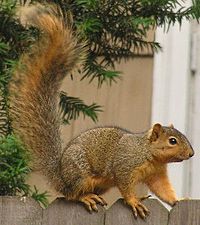
On the way to the supermarket, driving past the Ginn House (spiffing local pub), a red squirrel scampered up the grassy bank and darted under one of the hedges. I swear it was going for the back door of the pub. It was probably intent on pilfering the nutty nibbles that often conveniently lie in strategically placed bowls along the drink-stained wooden bar, unless the woodland creatures have finally done the sensible thing and succumbed to alcohol.

With the devastating news that a great number of their arboreal shelters are under threat from disease due to bad luck (debatable) and human error (indisputable), our furry little friends have become so depressed that drink is the only answer: the only squirrels we'll now ever see are the ones, thin and morose, clutching a pint glass, propped up at bars and pubs nationwide, glumly reminiscing about the golden age of sylvan beauty, and the Darwinian way animals got on with it.

Comforting Squirrel would be Rabbit, who would have deferred to wise old Badger except that Badger has an ASBO because he is a rank carrier of tubercolosis and so he has to wait in the car park outside to avoid angry farmers disappointed by the decision to delay the cull. 'Anyway,' he thinks, packing his pipe with tobacco, 'can't smoke in there.' Deer keeps Badger company because he is disgusted by a set of antlers tastelessly on display above the bar. His wife has no such compunctions, however, and is on her third gin and tonic decrying the government for squeezing the bourgeoisie. Outside, Deer and Badger settle for a game of cards by the Bentley; loser has to moonwalk round the carpark whilst reciting irregular Latin verbs.

Hedgehog and his family are in the kitchens scouring plates, after a pact with the landlord saved them from being written off as useless, rabies-riddled scroungers of society. Of course, the rest of the animals don't speak to them any more: they are outcasts and traitors, may their prickles soften in the soapy washing-up-liquid water.

At the end of it all, Squirrel is drunk and still crying into Rabbit's shoulder (or haunch), asking why the Animals of Farthing Wood haven't come to save them then promptly rushing outside only to vomit over Badger's slightly worn brogues. Badger sighs, exasperated. What a terrible waste of merlot.